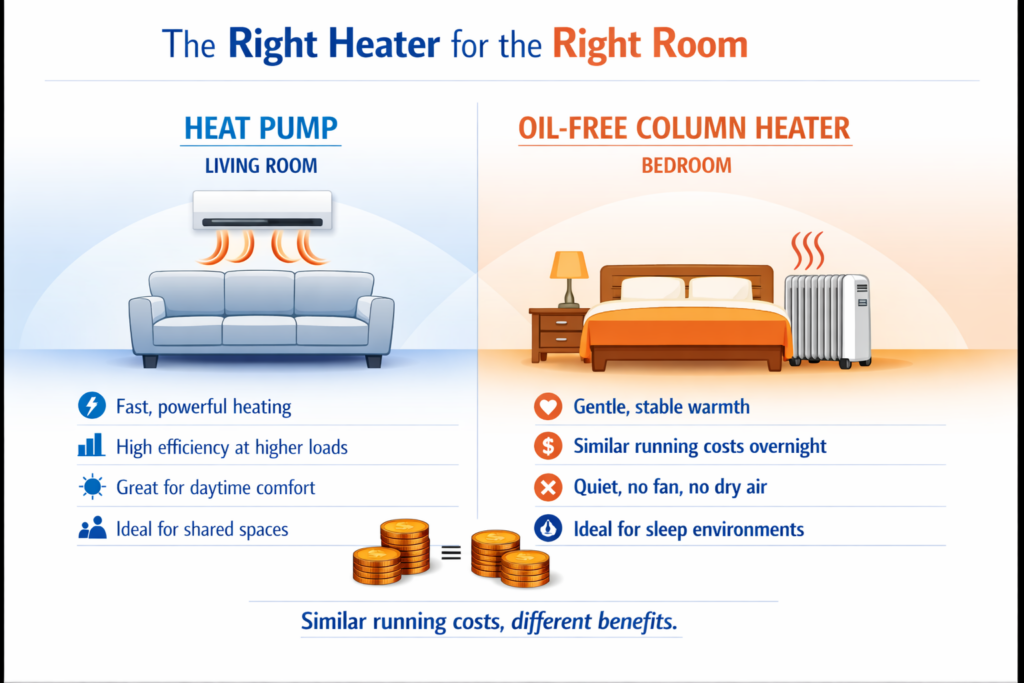
The Right Heater for the Right Room: Why Heat Pumps Fail in the Bedroom
Heat pumps do not create heat; they extract ambient warmth from the outdoor air and move it indoors. But on a freezing winter night—exactly when you need heating the most—outdoor temperatures hit their lowest point.
- The Mechanical Struggle: At low outside temperatures, a heat pump operates at its lowest Coefficient of Performance (COP). The outdoor compressor must fight at maximum power to absorb the tiny amount of available ambient heat.
- The Ice-Up Loop: This intense thermal extraction causes the outdoor heat exchanger coils to rapidly drop below freezing, turning moisture in the air into thick ice.
- The Defrost Power Drain: To save itself, the heat pump must periodically stop heating your bedroom and reverse into air conditioning mode. It consumes massive spikes of electricity to pump heat out of your house just to melt the ice off the outdoor unit.
The heat pump effectively wastes electricity fighting its own environment at the most inefficient hours of the night, blowing cool air into the room precisely during its defrost phase.
2. The Sleep Disrupting “Hot-Cold-Dry” Airflow
Human sleep cycles are highly sensitive to sudden environmental fluctuations.
- The Blast Effect: To maintain a constant 20°C in a small bedroom, a heat pump has to actively blow high-velocity, artificially dried air into the room.
- The Turbulence: Because it cycles in and out of defrost modes, the room experiences a constant, disruptive wave of hot, dry air followed by cool drafty pauses. This dry airflow dries out your respiratory passages, lowers your natural immune defense, and fragments your deep sleep cycles.
3. The Elegance of the Tapo-Controlled Plateau
A small bedroom does not need a massive mechanical compressor fighting the outdoor elements. It needs gentle, stable, radiant warmth.
By utilizing a standard, well-shielded radiant or convection heater plugged into a Tapo P110M Smart Plug, working alongside a Tapo T315 Monitor, you change the dynamic entirely:
- Local Stability: The system operates purely on internal room data, unaffected by outdoor frosting conditions.
- The Gentle Plateau: As detailed in our overnight tuning layout, setting your Tapo app to maintain a steady 18.5°C sleep plateau allows the heater to turn on and off softly in the background.
- Silent, Static Comfort: There is no turbulent blowing air, no humidity stripping, and no power-wasting defrost cycles. The heater quietly holds a protective thermal floor all night.
By reserving the heat pump for daytime lounge use and deploying a smart-controlled panel heater for the bedroom, you save money, protect your sleep architecture, and build a bedroom optimized for authentic health.
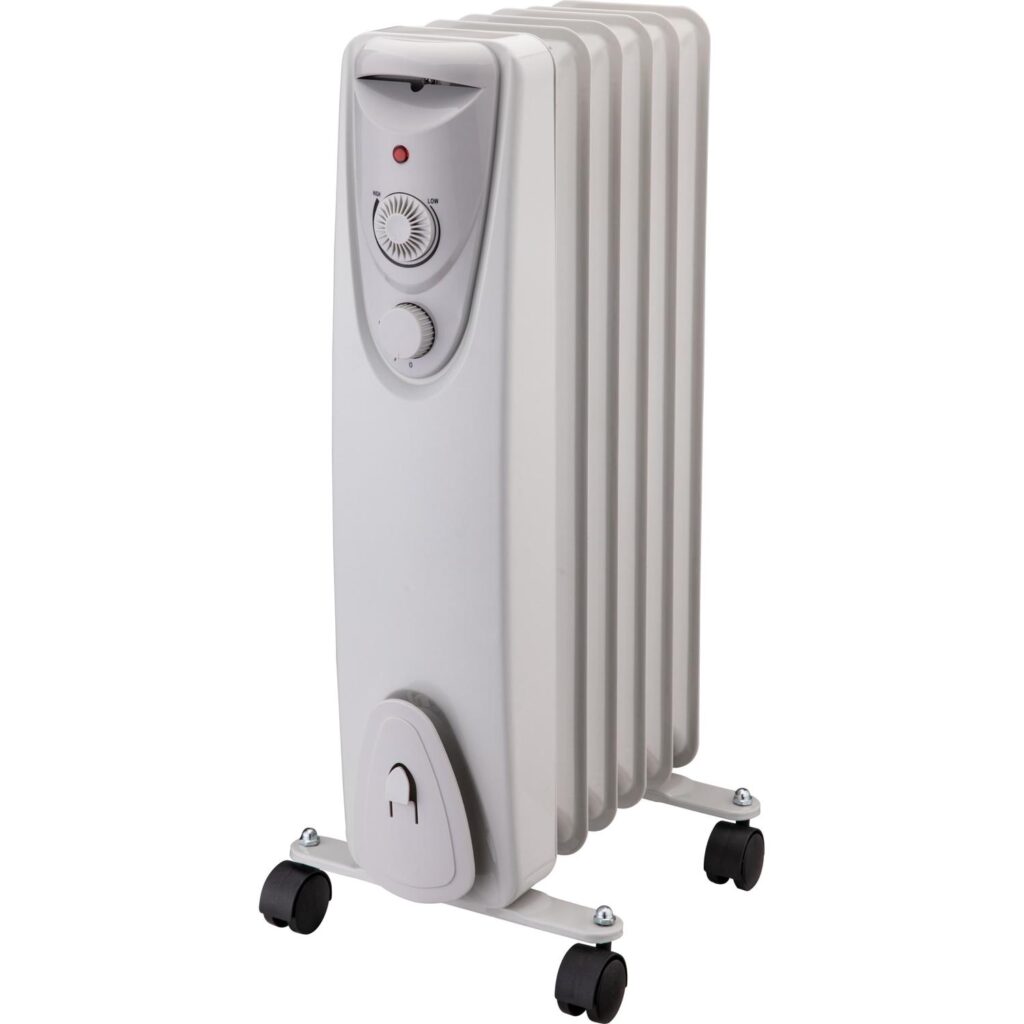
Oil-Free Column Heater 1.0 kw 3 heat 400w, 600w, 1000w
Why is a heat pump inefficient for heating a bedroom on freezing nights?
When outdoor temperatures drop, a heat pump’s efficiency (COP) collapses. The outdoor unit must work at maximum power, causing its coils to freeze over. It then must regularly reverse into a defrost cycle, consuming significant electricity just to melt its own ice instead of heating your room.
Why is a smart-plug controlled heater better for sleep health than a heat pump?
Heat pumps rely on high-velocity forced air that strips moisture from the room and causes hot-and-cold fluctuations during outdoor defrost cycles. A convection or radiant heater managed by a Tapo T315 sensor and P110M smart plug provides silent, stable warmth that gently plateaus at your target sleep temperature without blowing dry air or short-cycling.
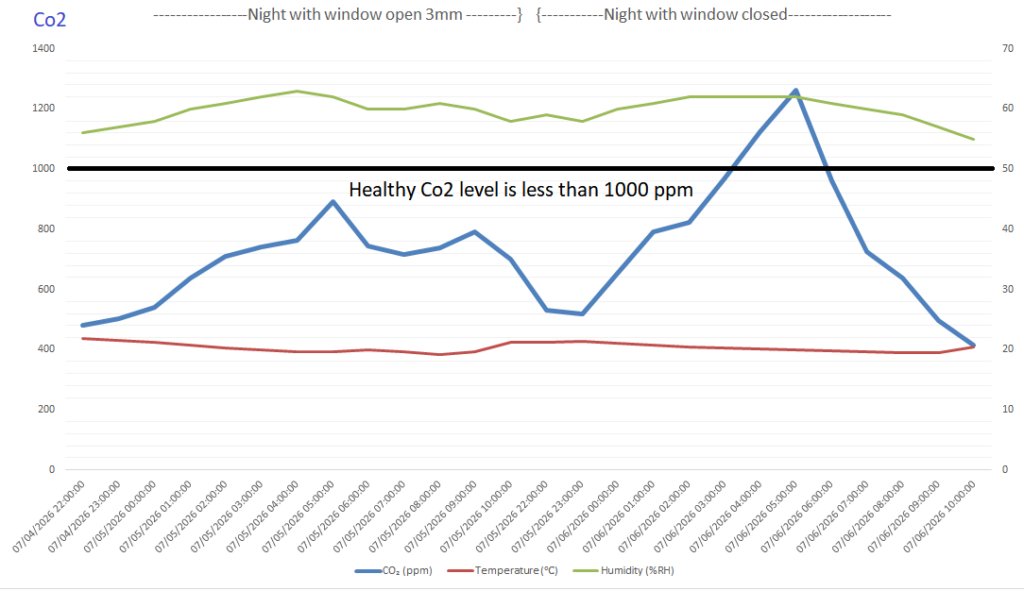
3mm window air gap night compared to a night with the window closed. The bedroom door was open and temperature set at 19.5 to 20 degrees.
Leave a Reply