The ideal sleep temperature recommended by health experts, including Southern Cross, is between 15°C and 19°C . This slightly cool environment helps your core body temperature naturally drop as you sleep, which promotes deeper, more restorative rest.
The Science of Cooler Sleep
While every individual has a unique “sweet spot,” most experts suggest keeping your bedroom thermostat set around 18°C for the best nighttime sleep.
Circadian Rhythm: Your body’s internal temperature drops significantly during the night. If your bedroom is too warm, your body has to work harder to shed heat, which can pull you out of deep sleep cycles and into light, restless sleep.
Ventilation: A well-ventilated room also ensures that your skin temperature stays comfortable without requiring you to sit in cold drafts.
“Somewhere between 17-19 degrees celsius is ideal”.
The Sleep Foundation USA
Best Temperature for Sleep
The ideal bedroom temperature for most adults is between 15.6°C and 19.4°C (60°F to 67°F) This cool environment helps mimic the body’s natural nightly temperature drop, which is a crucial cue for falling asleep and staying in deep, restorative stages of rest.
It is very easy to Program the following two Smart Actions exactly like this in your Tapo App:
Action 1: The Ceiling Limit
Smart Action Name: >18.5°C Heater OFF
Effective Time: 11:00 PM – 7:59 AM (Next day), Every day
WHEN (Trigger): T315 Temperature → Higher than 18.5°C
THEN (Action): P110M → Turn OFF
Notification: Send Notification: Room over 18.5°C – Heater OFF
Action 2: The Floor Limit
Smart Action Name: <18.0°C Heater ON
Effective Time: 11:00 PM – 7:59 AM (Next day), Every day
WHEN (Trigger): T315 Temperature → Lower than 18.0°C
THEN (Action): P110M → Turn ON
Notification: Send Notification: Room under 18.0°C – Heater ON
Note: The Tapo T315 has a built-in 0.1°C firmware safety cushion. This means Action 1 will trigger at 18.1°C and Action 2 will trigger at 17.9°C, naturally preventing your heater from short-cycling or clicking on and off rapidly.
Temtop Co2 2nd edition Monitor
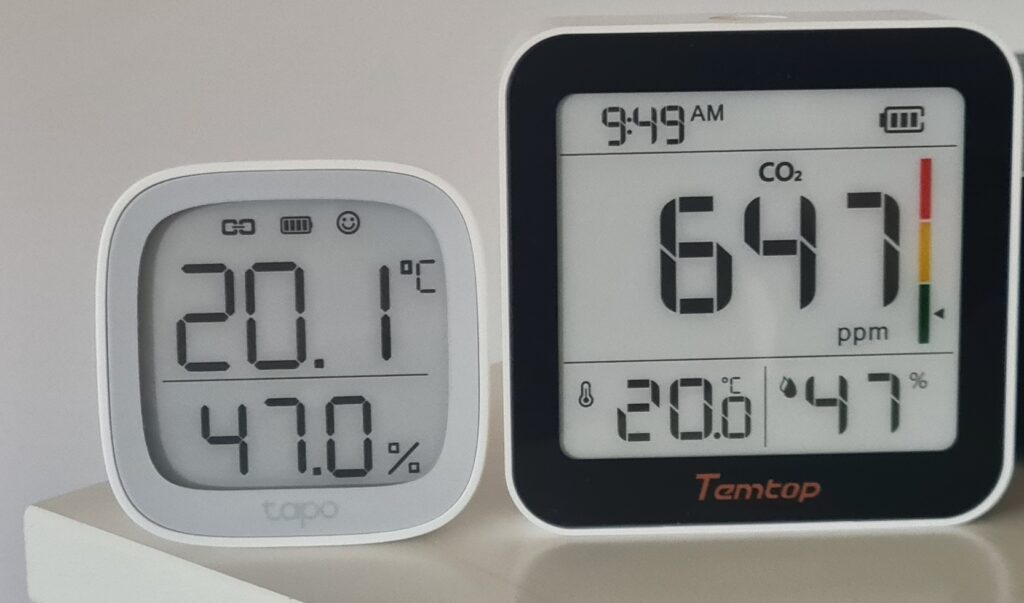
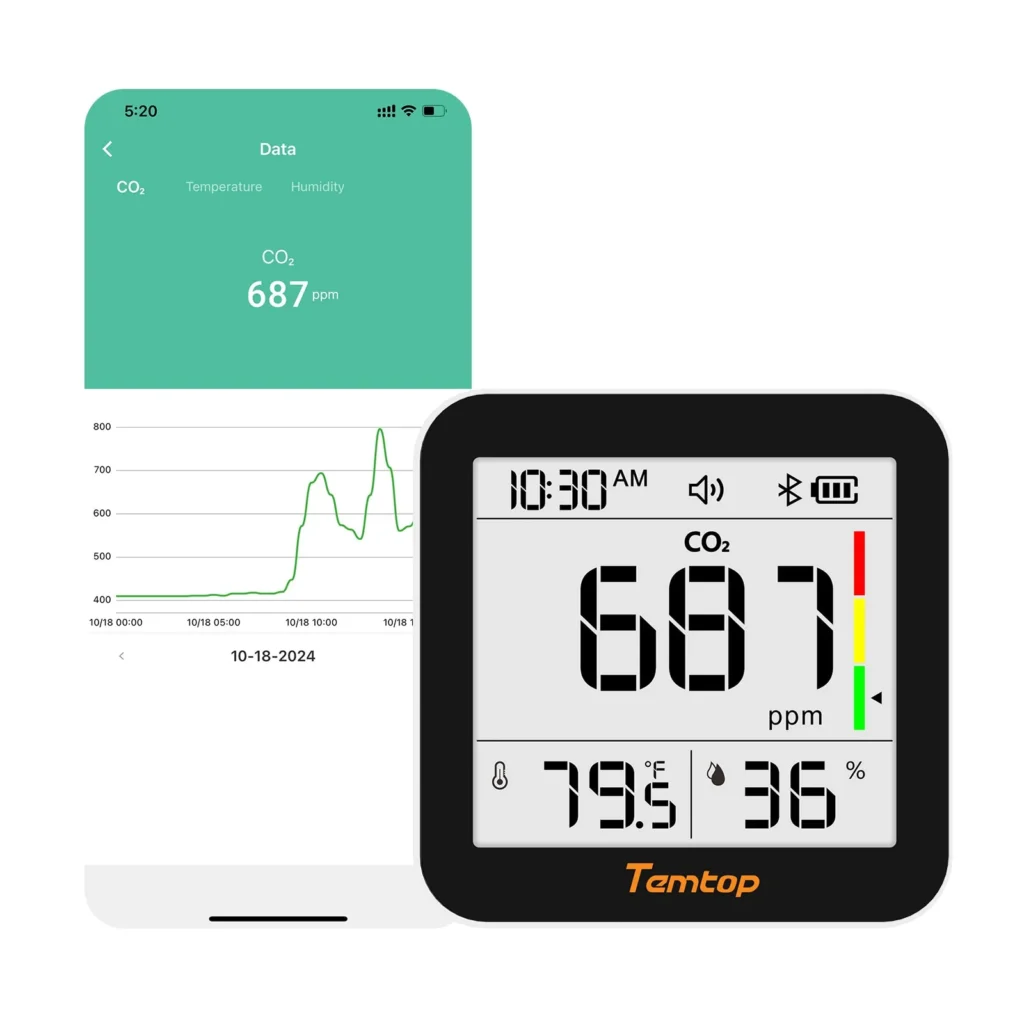
The Temtop Co2 2nd edition Monitor displays and records the Co2 level of the air in your bedroom. There is an optional alarm function that will alert you to the unhealthy high Co2 level. Opening the window slightly will lower the Co2 level.
Educational and Information Purposes Only The content, methodologies, and data-tracking tools provided on www.totalsupport.co.nz are intended solely for educational, analytical, and informational purposes. The information presented herein reflects independent building-science observations regarding ambient indoor air quality, thermal dynamics, and carbon dioxide monitoring.
Not Legal, Financial, or Statutory Advice Total Support does not provide legal, financial, architectural, or statutory compliance advice. The use of smart home monitoring devices (such as Tapo or Sonoff systems) and manual ventilation adjustments represent independent consumer experiments. These methodologies do not constitute a formal interpretation of, nor an official exemption from, the Residential Tenancies (Healthy Homes Standards) Regulations 2019 or any subsequent New Zealand government amendments.
Statutory Compliance Responsibility Landlords, property managers, and tenants remain strictly and solely responsible for ensuring their properties fully comply with all current New Zealand legislative frameworks, Tenancy Tribunal rulings, and municipal bylaws. Total Support, its owners, and its contributors accept no liability or responsibility for any legal disputes, Tenancy Tribunal actions, statutory penalties, or property damage (including mold or moisture accumulation) arising from actions taken based on the content of this website.
The Right Heater for the Right Room: Why Heat Pumps Fail in the Bedroom
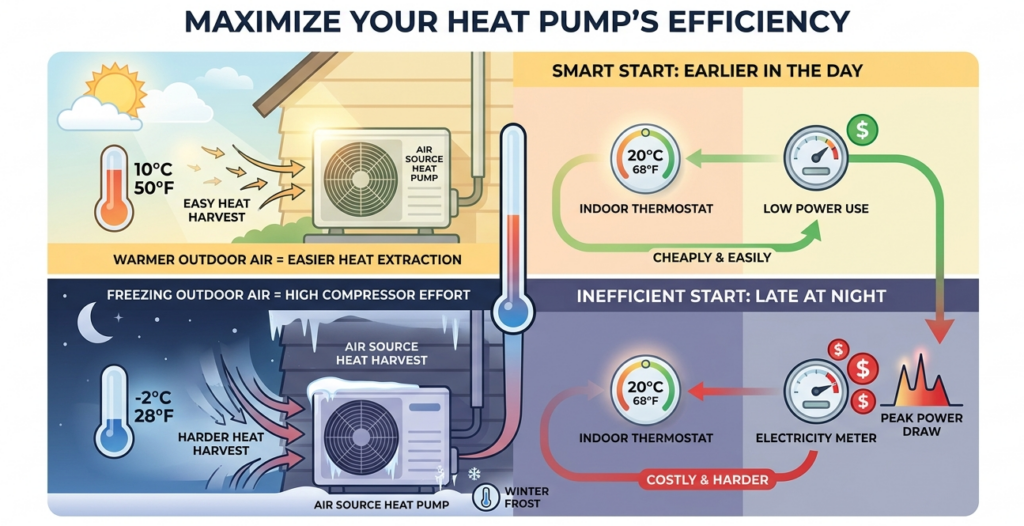
Heat pumps do not create heat; they extract ambient warmth from the outdoor air and move it indoors. But on a freezing winter night—exactly when you need heating the most—outdoor temperatures hit their lowest point.
The Mechanical Struggle: At low outside temperatures, a heat pump operates at its lowest Coefficient of Performance (COP). The outdoor compressor must fight at maximum power to absorb the tiny amount of available ambient heat.
The Ice-Up Loop: This intense thermal extraction causes the outdoor heat exchanger coils to rapidly drop below freezing, turning moisture in the air into thick ice.
The Defrost Power Drain: To save itself, the heat pump must periodically stop heating your bedroom and reverse into air conditioning mode. It consumes massive spikes of electricity to pump heat out of your house just to melt the ice off the outdoor unit.
The heat pump effectively wastes electricity fighting its own environment at the most inefficient hours of the night, blowing cool air into the room precisely during its defrost phase.
2. The Sleep Disrupting “Hot-Cold-Dry” Airflow
Human sleep cycles are highly sensitive to sudden environmental fluctuations.
The Blast Effect: To maintain a constant 20°C in a small bedroom, a heat pump has to actively blow high-velocity, artificially dried air into the room.
The Turbulence: Because it cycles in and out of defrost modes, the room experiences a constant, disruptive wave of hot, dry air followed by cool drafty pauses. This dry airflow dries out your respiratory passages, lowers your natural immune defense, and fragments your deep sleep cycles.
3. The Elegance of the Tapo-Controlled Plateau
A small bedroom does not need a massive mechanical compressor fighting the outdoor elements. It needs gentle, stable, radiant warmth.
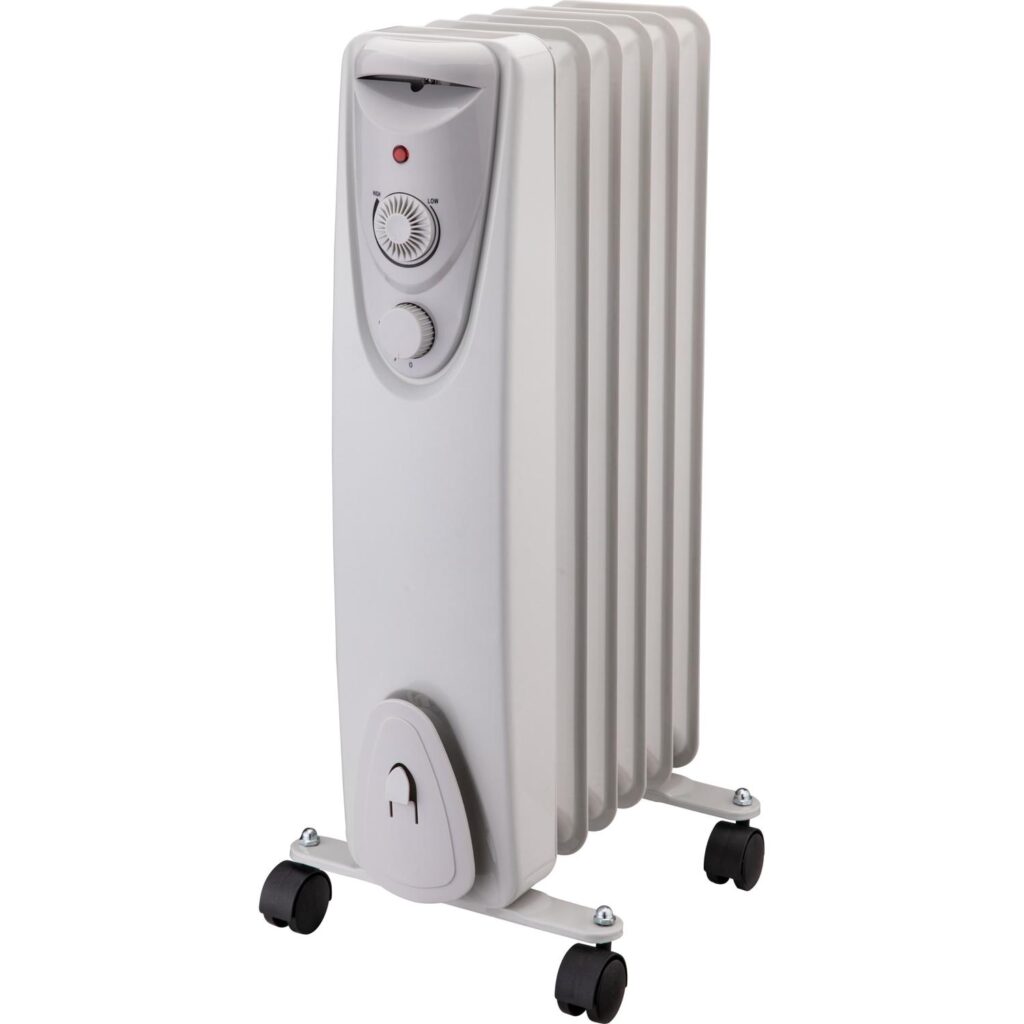
By utilizing a standard, well-shielded radiant or convection heater plugged into a Tapo P110M Smart Plug, working alongside a Tapo T315 Monitor, you change the dynamic entirely:
Local Stability: The system operates purely on internal room data, unaffected by outdoor frosting conditions.
The Gentle Plateau: As detailed in our overnight tuning layout, setting your Tapo app to maintain a steady 18.5°C sleep plateau allows the heater to turn on and off softly in the background.
Silent, Static Comfort: There is no turbulent blowing air, no humidity stripping, and no power-wasting defrost cycles. The heater quietly holds a protective thermal floor all night.
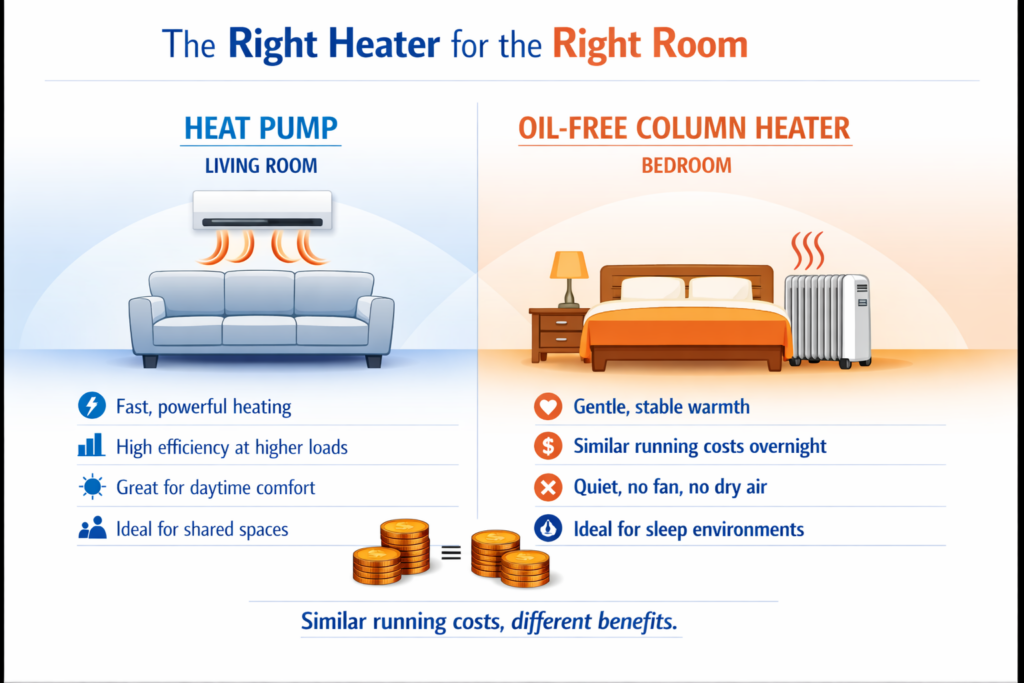
By reserving the heat pump for daytime lounge use and deploying a smart-controlled panel heater for the bedroom, you save money, protect your sleep architecture, and build a bedroom optimized for authentic health.
Why is a heat pump inefficient for heating a bedroom on freezing nights?
When outdoor temperatures drop, a heat pump’s efficiency (COP) collapses. The outdoor unit must work at maximum power, causing its coils to freeze over. It then must regularly reverse into a defrost cycle, consuming significant electricity just to melt its own ice instead of heating your room.
Why is a smart-plug controlled heater better for sleep health than a heat pump?
Heat pumps rely on high-velocity forced air that strips moisture from the room and causes hot-and-cold fluctuations during outdoor defrost cycles. A convection or radiant heater managed by a Tapo T315 sensor and P110M smart plug provides silent, stable warmth that gently plateaus at your target sleep temperature without blowing dry air or short-cycling.
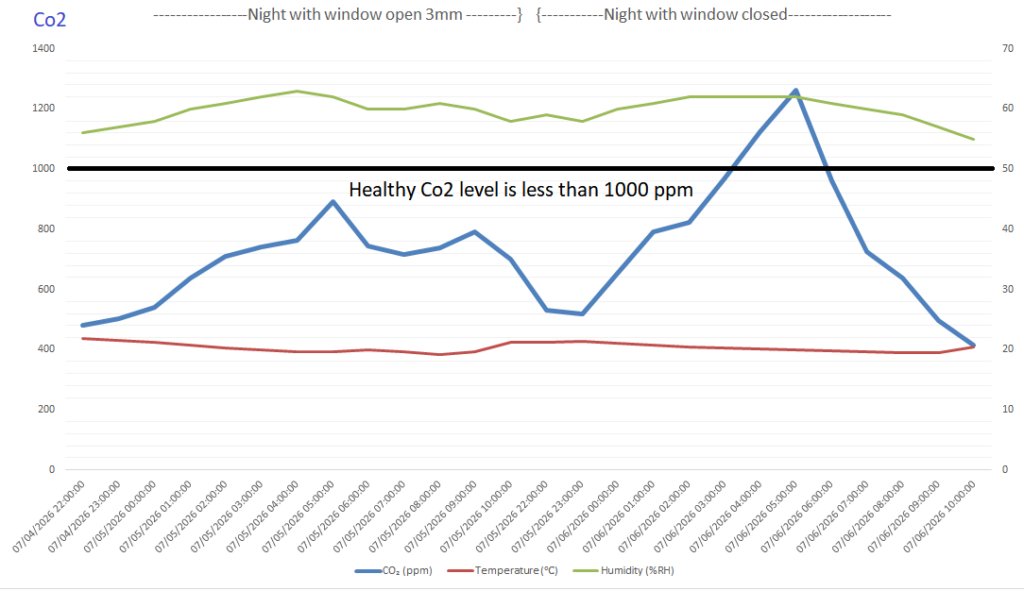
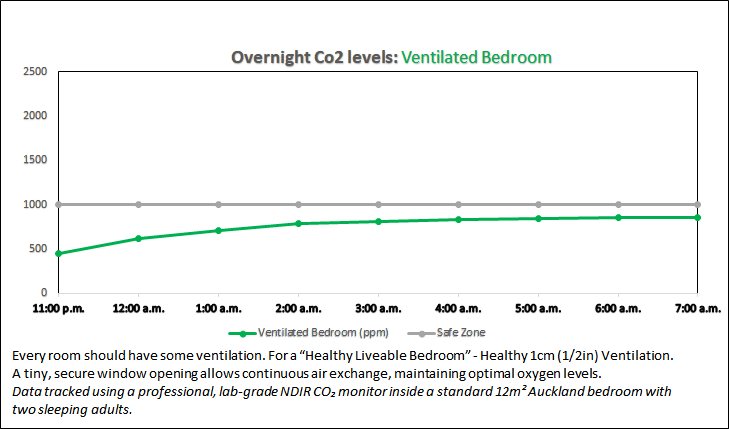
3mm window air gap night compared to a night with the window closed. The bedroom door was open and temperature set at 19.5 to 20 degrees.
Educational and Information Purposes Only The content, methodologies, and data-tracking tools provided on www.totalsupport.co.nz are intended solely for educational, analytical, and informational purposes. The information presented herein reflects independent building-science observations regarding ambient indoor air quality, thermal dynamics, and carbon dioxide monitoring.
Not Legal, Financial, or Statutory Advice Total Support does not provide legal, financial, architectural, or statutory compliance advice. The use of smart home monitoring devices (such as Tapo or Sonoff systems) and manual ventilation adjustments represent independent consumer experiments. These methodologies do not constitute a formal interpretation of, nor an official exemption from, the Residential Tenancies (Healthy Homes Standards) Regulations 2019 or any subsequent New Zealand government amendments.
Statutory Compliance Responsibility Landlords, property managers, and tenants remain strictly and solely responsible for ensuring their properties fully comply with all current New Zealand legislative frameworks, Tenancy Tribunal rulings, and municipal bylaws. Total Support, its owners, and its contributors accept no liability or responsibility for any legal disputes, Tenancy Tribunal actions, statutory penalties, or property damage (including mold or moisture accumulation) arising from actions taken based on the content of this website.
Balancing Comfort and Air Quality: The Bedroom Ventilation Equation – Healthy Living Bedroom Ventilation
Achieving a truly healthy, comfortable bedroom requires managing a delicate balance between heat retention and fresh air circulation. In recent years, property guidelines in New Zealand have emphasized thorough insulation and draft-sealing to maximize heating efficiency. While these measures are excellent for keeping a home warm and reducing electricity bills, they also change how a building breathes.
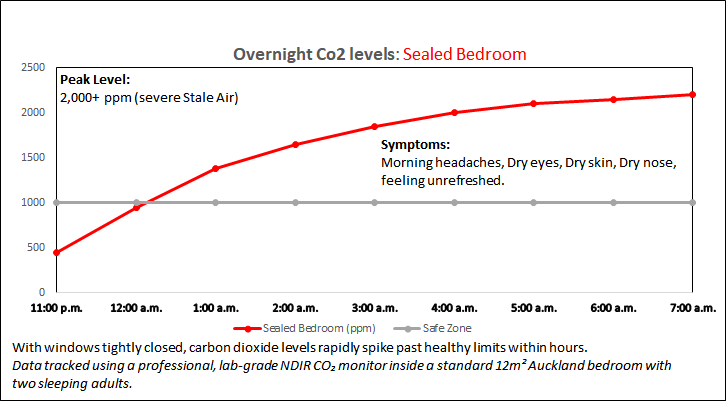
When a bedroom is completely sealed to trap warmth, natural air exchange slows down. Over an 8-hour sleep cycle, this can create an unintended side effect: a buildup of moisture vapor and a steady rise in carbon dioxide (CO₂) levels.
Understanding the Insulation and Ventilation Puzzle
It is a well-documented architectural reality that as homes become more airtight, the need for managed, intentional ventilation increases. If moisture has no clear path to escape, it condenses on cold windows and walls, which can inadvertently foster mold growth—even in homes that technically meet all structural heating compliance standards.
Because most people understandably prefer not to leave a main window wide open during a cold winter night, finding a middle ground is essential. Interestingly, official guidance from Tenancy Services notes that gaps under 3mm (roughly the edge of a New Zealand $2 coin) are not classified as draft defects requiring sealing.
Utilizing a minor, controlled 3mm gap as a passive air path can serve as a highly practical way to let excess humidity escape and keep overnight air fresh, without significantly impacting your room’s warmth.
Effective healthy living bedroom ventilation is crucial for a restful sleep environment.
Monitoring Your Sleep Environment with Data
Rather than guessing how your room is performing, you can use simple, low-cost smart hardware to find the exact “sweet spot” for your unique space:
The Tapo H100 Hub & T315 Monitor: This system acts as your local climate brain, tracking precise temperature and humidity changes right from your phone.
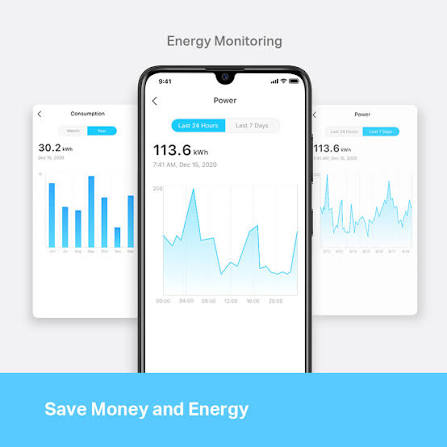
The Tapo P110M Smart Plug: Connected to your electric heater, this tracks exact power usage (kWh) so you know exactly what your heating costs are.
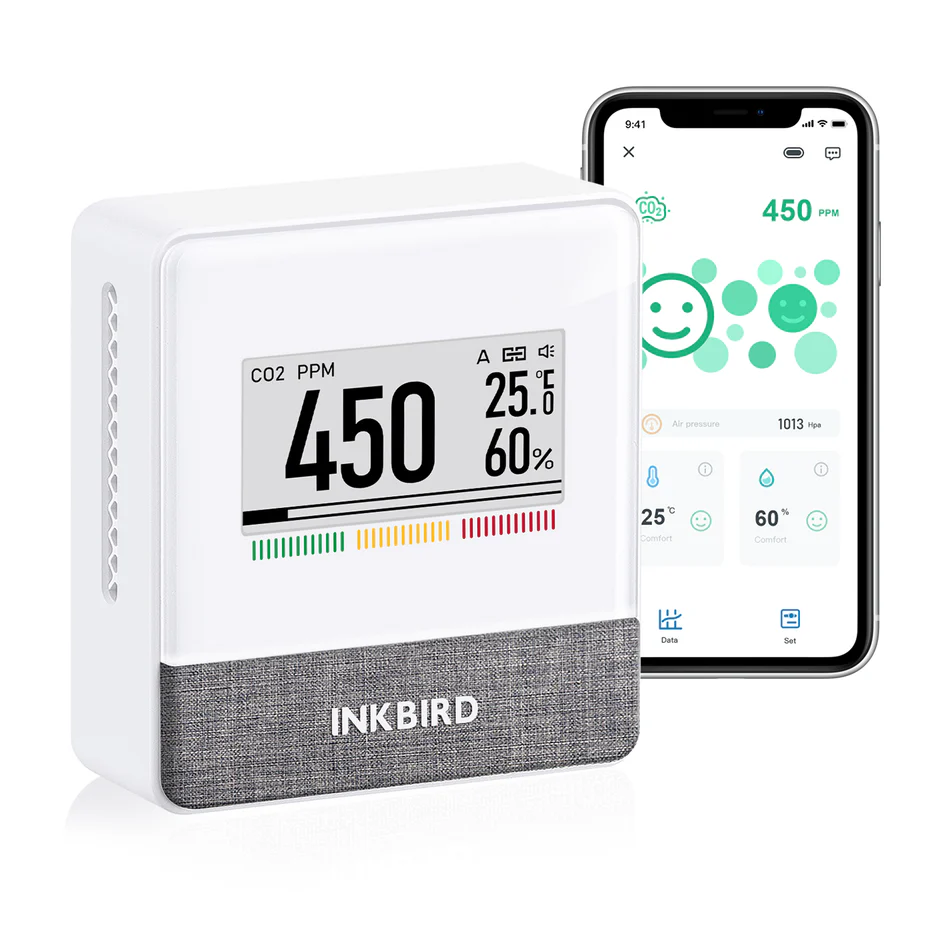
A Standalone CO₂ Monitor: Placing an independent monitor (like a standalone Wi-Fi sensor) on your nightstand lets you visually track overnight air quality trends.
By programming your Tapo app to maintain a steady target—such as a comfortable overnight plateau of 18.5°C—you can run a simple multi-night test. By tracking your heater’s kWh power consumption against different minor window adjustments, you can easily identify the precise, controlled gap that keeps your air clean and dry while keeping your electricity costs minimal.
Can I use multiple Tapo T315 sensors on a single Tapo H100 Hub?
Yes. The Tapo H100 smart hub supports up to 64 connected devices simultaneously. Because the T315 tracks both temperature and humidity, the Tapo App counts it as two connected endpoints, leaving plenty of room to expand your network.
Does the Tapo P110M smart plug require the Tapo H100 Hub to function?
No. The Tapo P110M is a standalone, Matter-certified smart plug that connects directly to your home’s 2.4 GHz Wi-Fi router. It operates independently and does not use or count against the 64-device limit of the Tapo H100 hub.
Why is ventilation important in a heavily insulated or draft-sealed bedroom?
When a room is thoroughly sealed to maximize heating efficiency, natural air exchange slows down. Overnight, breathing creates moisture vapor and raises carbon dioxide (CO₂) levels. Managed ventilation is necessary to allow this humidity to escape, preventing condensation and maintaining fresh air quality.
What is the 3mm window gap rule mentioned in housing documentation?
Official New Zealand tenancy guidelines note that gaps or openings smaller than 3mm (the edge of a NZ $2 coin) are generally not classified as draft defects that require sealing. Utilizing a controlled, minor gap of this size can act as a subtle, passive air path to ventilate a room without causing significant heat loss.
How do I prevent a smart heater automation from turning on and off too quickly?
The Tapo T315 monitor features a built-in 0.1°C firmware safety delay. If your automation parameters are set to turn a heater off above 18.5°C and on below 18.0°C, the device automatically cushions those threshold boundaries, allowing the room to plateau smoothly without short-cycling the appliance.
The Toxic Reality of a Sealed Bedroom
If properties are made completely airtight without passive ventilation—like the continuous “trickle vents” legally required on all new windows in the United Kingdom—we may turn modern Kiwi bedrooms into unventilated, unhealthy sealed boxes.
When you sleep inside a fully sealed bedroom, two invisible dangers rapidly develop over an 8-hour night:
The Moisture Bomb: A sleeping adult breathes out roughly 200ml of water vapor every single night. In an airtight room, that moisture has nowhere to escape. It hits the cold window glass and walls, creating a breeding ground for toxic black mold.
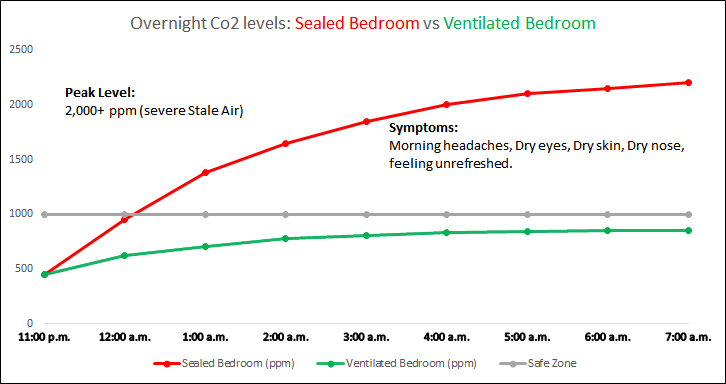
The Carbon Dioxide (CO₂) Spike: As you sleep, you consume oxygen and exhale carbon dioxide. In a sealed room, CO₂ quickly spikes from a healthy outdoor baseline of 420 ppm to over 2,000 ppm by 3:00 AM. This results in fragmented sleep, morning headaches, and deep fatigue.
The Real Solution: Data Over Dogma
You cant blame people for “not opening windows,” but nobody is going to leave a main window wide open in the middle of a freezing winter night. The Healthy Homes guidelines do contain a tiny, buried clause mentioning a 3mm gap, but people may completely ignore it.
They shouldn’t. That tiny 3mm crack is actually the missing link to a healthy home.
At Total Support, we don’t guess—we use data. By combining affordable, highly precise smart tech, we can solve this ventilation paradox without blowing your power bill out of the water.
The Low-Cost Smart Hardware Infrastructure
To run this experiment, you only need three core low-cost components working alongside a standalone monitor:
The Tapo H100 Smart Hub: This is the low-cost “brain” of your heating system. It plugs into any wall outlet, connects to your home Wi-Fi, and serves as the secure, local wireless master control. It can support up to 64 devices simultaneously, handling all your automation routing locally and instantly.
The Tapo T315 Monitor: A highly accurate, battery-powered temperature and humidity sensor with an easy-to-read screen. It communicates back to the H100 Hub on a low-frequency Sub-G wireless band to save battery life.
The Tapo P110M Smart Plug: A heavy-duty, Matter-compatible smart plug with built-in energy monitoring that connects directly to your electric heater.
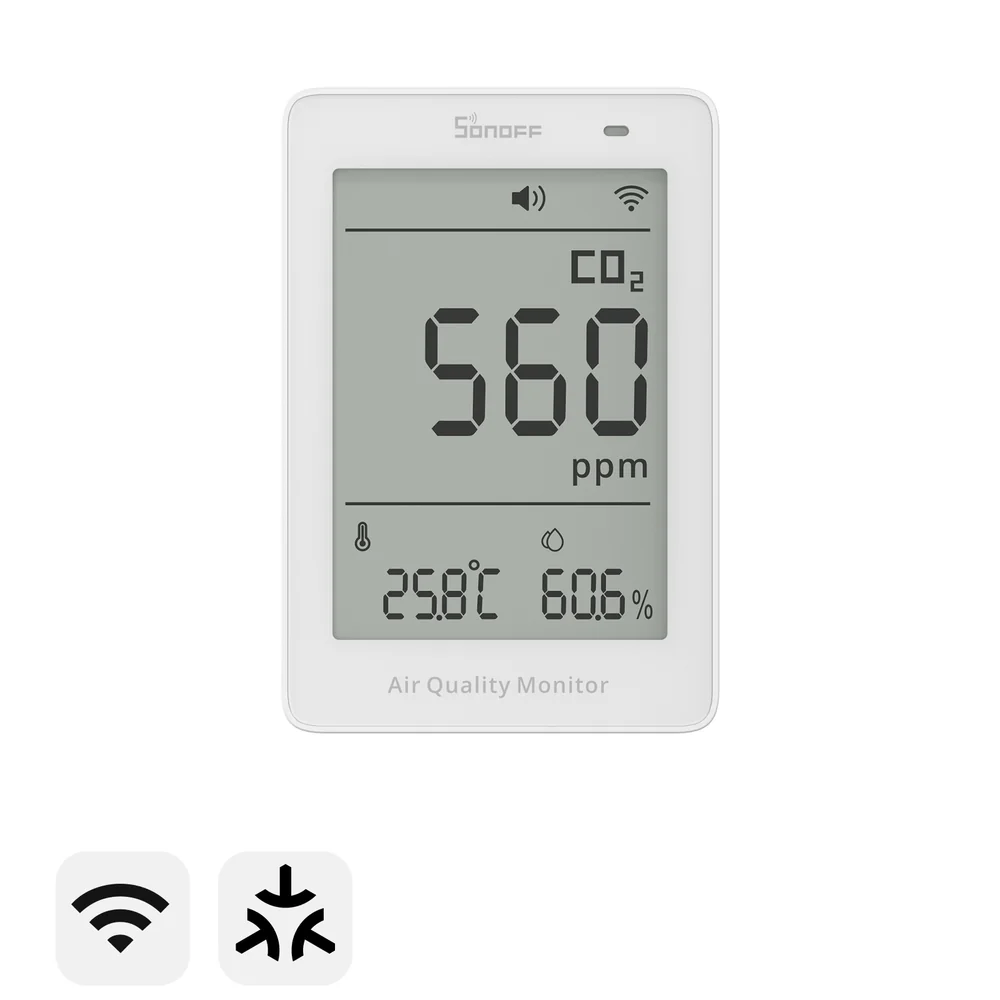
The Standalone SONOFF AirGuard CO2 Monitor: A premium, standalone NDIR sensor that sits on your nightstand to record historical air freshness data cleanly via Wi-Fi without needing a complex smart home bridge.
The Tapo Smart Action Parameters
You have complete freedom during the evening to adjust the bedroom to any temperature you find comfortable while relaxing, reading, or watching TV. The automated overnight scripts are completely dormant during this window.
However, at 11:00 PM, the automated system goes live to protect your sleep environment. To ensure the room successfully plateaus at your target 18.5°C, simply verify before sleep that the physical mechanical dial/thermostat on the heater itself is turned up high enough (e.g., set to 21°C or 22°C).
Program the following two Smart Actions exactly like this in your Tapo App:
Action 1: The Ceiling Limit
Smart Action Name: >18.5°C Heater OFF
Effective Time: 11:00 PM – 7:59 AM (Next day), Every day
WHEN (Trigger): T315 Temperature → Higher than 18.5°C
THEN (Action): P110M → Turn OFF
Notification: Send Notification: Room over 18.5°C – Heater OFF
Action 2: The Floor Limit
Smart Action Name: <18.0°C Heater ON
Effective Time: 11:00 PM – 7:59 AM (Next day), Every day
WHEN (Trigger): T315 Temperature → Lower than 18.0°C
THEN (Action): P110M → Turn ON
Notification: Send Notification: Room under 18.0°C – Heater ON
Note: The Tapo T315 has a built-in 0.1°C firmware safety cushion. This means Action 1 will trigger at 18.1°C and Action 2 will trigger at 17.9°C, naturally preventing your heater from short-cycling or clicking on and off rapidly.
The Total Support Bedtime Tuning Log
Use this 3-night manual tuning experiment to find your bedroom’s perfect structural and biological “sweet spot”:
Night
Window Setting
Target Temp
Overnight Power (Tapo P110M)
Max CO₂ Level (Sonoff AirGuard)
Morning Room Health Check
Night 1
Fully Sealed
18.5°C
_____ kWh
_____ ppm
[ ] Headaches? [ ] Stuffy? [ ] Mold/Condensation?
Night 2
3mm Gap($2 Coin Trickle)
18.5°C
_____ kWh
_____ ppm
[ ] Headaches? [ ] Stuffy? [ ] Mold/Condensation?
Night 3
Fine Tuned(Adjusted Gap)
18.5°C
_____ kWh
_____ ppm
[ ] Headaches? [ ] Stuffy? [ ] Mold/Condensation?
How to Analyze Your Log Sheet:
The CO₂ Threshold: If Night 1 shows CO₂ climbing above 1,000 ppm, your bedroom is a sealed hazard. Look to see how drastically that number drops on Night 2 with your intentional 3mm gap.
The Cost-to-Health Equation: Compare the kWh usage of Night 1 against Night 2 in your Tapo App. The tiny difference in your power bill is the exact, literal price of breathing fresh, safe air and keeping toxic mold off the walls.
The Final Adjustment: If Night 2 still shows slightly high CO₂ or lingering window condensation, widen the gap to 4–5mm for Night 3. If the room felt too drafty, bring it strictly back to the 3mm line. It is time to stop blindly sealing our homes and start smartly tuning them.
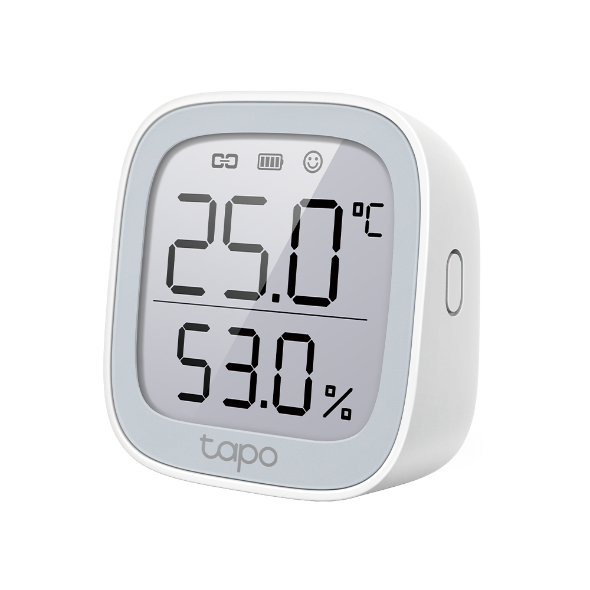
Tapo T315 Thermostat with a Temperature and Humidity display. The beautiful e-ink display provides clear readings and a long battery life. Place the Tapo T315 where you want to maintain accurate temperature.
Tapo P110M Smart Plug Kwh graphs on Smart phone Tapo Free App
“Temtop Co2 second edition Air Quality monitor” Bluetooth with Co2 history, Temperature and Humidity graphs. High quality e-ink display. Rechargable 180 day battery. 180 days of Co2 ppm, Temperature and Humidity historical data available on the free app. Data can be exported as an “Excel xlsx file” and sent via email.
Educational and Information Purposes Only The content, methodologies, and data-tracking tools provided on www.totalsupport.co.nz are intended solely for educational, analytical, and informational purposes. The information presented herein reflects independent building-science observations regarding ambient indoor air quality, thermal dynamics, and carbon dioxide monitoring.
Not Legal, Financial, or Statutory Advice Total Support does not provide legal, financial, architectural, or statutory compliance advice. The use of smart home monitoring devices (such as Tapo or Sonoff systems) and manual ventilation adjustments represent independent consumer experiments. These methodologies do not constitute a formal interpretation of, nor an official exemption from, the Residential Tenancies (Healthy Homes Standards) Regulations 2019 or any subsequent New Zealand government amendments.
Statutory Compliance Responsibility Landlords, property managers, and tenants remain strictly and solely responsible for ensuring their properties fully comply with all current New Zealand legislative frameworks, Tenancy Tribunal rulings, and municipal bylaws. Total Support, its owners, and its contributors accept no liability or responsibility for any legal disputes, Tenancy Tribunal actions, statutory penalties, or property damage (including mold or moisture accumulation) arising from actions taken based on the content of this website.
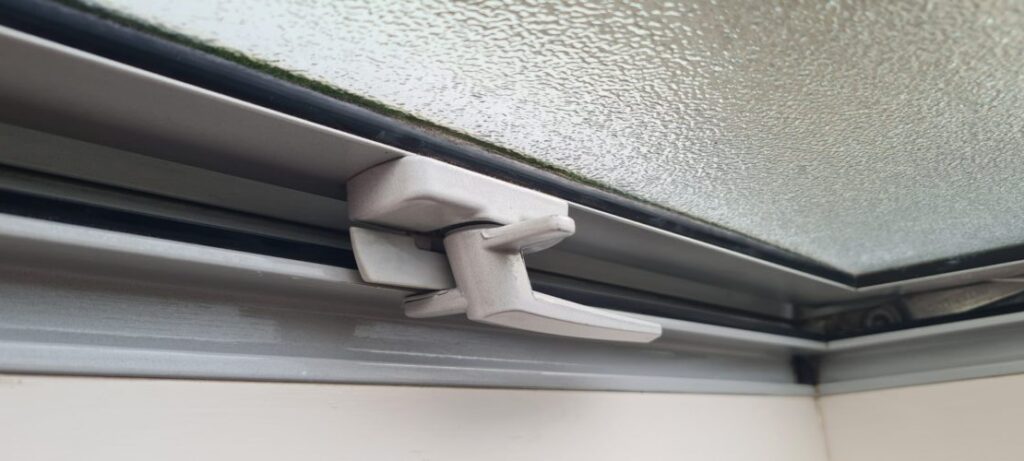
Fresh air is essential for healthy sleep! Use this secure ventilation setting for a “Healthy Liveable Bedroom” and a healthy sleep solution.
Protecting Your Skin from “Heat Pump Dryness”
If you prefer to keep your bedroom sealed with a heat pump running, tracking your Co2 level with a NDIR monitor is step one. Step two is protecting your skin barrier from the dehumidifying effects of recycled air.
When sleeping in an air-conditioned room, your skin loses moisture to the dry air all night long. We recommend introducing a targeted, barrier-repairing Moisturiser into your evening routine to lock in hydration and wake up with a radiant, healthy complexion. I recommend the natural moisturisers from White Spa Auckland or Acajou Spa Ponsonby. An alternative option is the Aveeno Skin Relief Moisture Repair Cream from the Chemist Warehouse. This low-cost moisturiser is available throughout the country.
In today’s society, more and more people are concerned about the impact of indoor air quality on physical health. However, people often ignore the effect of carbon dioxide concentrations in the indoor environment. High carbon dioxide levels can cause hypersomnia and a 50% decline in human cognitive function. Therefore, the IAM-T1 Bluetooth air quality monitor is the first choice for your healthy and safe home life.
Incorporating a healthy sleep solution can greatly improve your overall well-being.
Educational and Information Purposes Only The content, methodologies, and data-tracking tools provided on www.totalsupport.co.nz are intended solely for educational, analytical, and informational purposes. The information presented herein reflects independent building-science observations regarding ambient indoor air quality, thermal dynamics, and carbon dioxide monitoring.
Not Legal, Financial, or Statutory Advice Total Support does not provide legal, financial, architectural, or statutory compliance advice. The use of smart home monitoring devices (such as Tapo or Sonoff systems) and manual ventilation adjustments represent independent consumer experiments. These methodologies do not constitute a formal interpretation of, nor an official exemption from, the Residential Tenancies (Healthy Homes Standards) Regulations 2019 or any subsequent New Zealand government amendments.
Statutory Compliance Responsibility Landlords, property managers, and tenants remain strictly and solely responsible for ensuring their properties fully comply with all current New Zealand legislative frameworks, Tenancy Tribunal rulings, and municipal bylaws. Total Support, its owners, and its contributors accept no liability or responsibility for any legal disputes, Tenancy Tribunal actions, statutory penalties, or property damage (including mold or moisture accumulation) arising from actions taken based on the content of this website.